
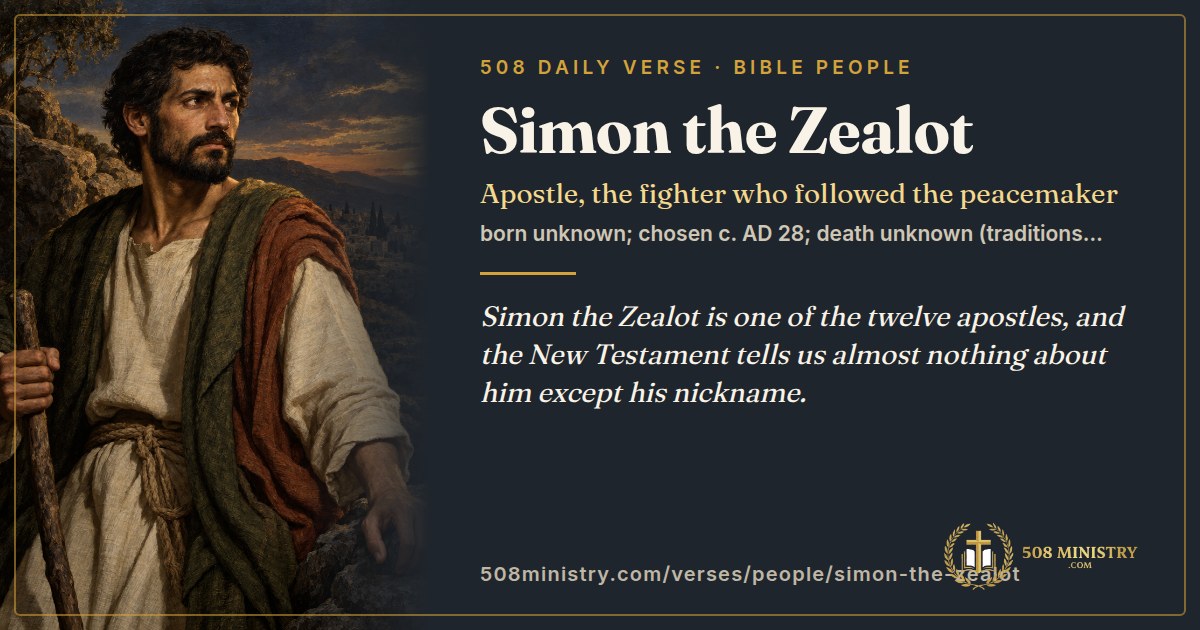

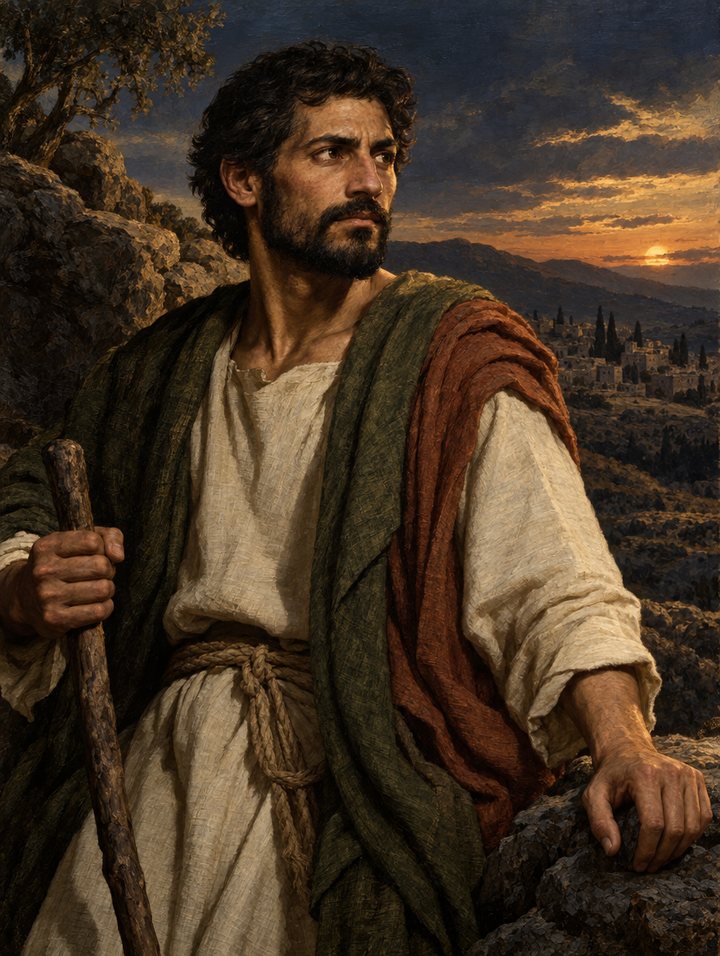
The world he was born into
To understand why Simon's nickname matters, you have to feel the weight of Roman rule in the Jewish homeland.
Rome took control of Judea in 63 BC, when the general Pompey entered Jerusalem and, to the horror of the Jews, walked into the Temple's inner room. Rome then set up Herod the Great as client king, and the Herods ruled with Roman backing for decades. When Herod the Great died in 4 BC, risings broke out across the land, and the Roman governor of Syria put them down with brutality. In Galilee, a man named Judas, son of Ezekias, seized the arsenal at Sepphoris, a town only a few miles from Nazareth. Rome burned the town and sold its people into slavery. Read about the rulers who shaped the period in Herod the Great and Herod Antipas.
In AD 6, Rome removed Herod's son Archelaus and made Judea a province under a prefect. A census was ordered for taxation. The historian Josephus, who wrote the story of these years for Roman readers, says that a teacher named Judas of Galilee, together with a Pharisee named Zadok, led a protest, telling the people that paying the tax was slavery and that God alone was their master (Josephus, Antiquities 18.1.1 and 18.1.6; compare Acts 5:37, where Gamaliel mentions "Judas of Galilee in the days of the census"). Josephus calls this movement a "fourth philosophy" beside the Pharisees, Sadducees and Essenes and says it burned with a passion for liberty. It is the nearest thing we have to the background of Simon's nickname. You can read these passages free at Project Gutenberg.
By the time Jesus began teaching, around AD 27 to 29, the ground under the people was shaking. Galilee was ruled by Herod Antipas, Judea by Pontius Pilate (AD 26-36). The land was full of prophets and would-be messiahs, many of whom Rome crushed. Josephus names several. Acts 5:36-37 mentions two, Theudas and Judas the Galilean, and Acts 21:38 mentions an Egyptian who led 4,000 "assassins" into the wilderness. Barabbas, the man released in place of Jesus, is described as one of the insurrectionists who had committed murder in a rising (Mark 15:7). The two men crucified with Jesus are called lestai in Greek (Mark 15:27), a word Josephus often uses for armed rebels, though it can also mean plain bandits. Whether those two were bandits or freedom fighters, they had run afoul of Rome.
That is the world in which a man was called "the Zealot."
What "Zealot" meant
The word needs careful handling, because it has two meanings in history.
A passion, from early on. The Hebrew Scriptures honor "zeal" for God. Phinehas, the grandson of Aaron, acted with fierce zeal to stop Israel's idolatry (Numbers 25:6-13). Elijah said, "I have been very jealous [zealous] for Yahweh, the God of Armies" (1 Kings 19:10). When the Syrian king Antiochus IV tried to force Greek ways on the Jews in the second century BC, a priest named Mattathias called on everyone who was zealous for the law and held to the covenant to follow him (1 Maccabees 2:27), and the Maccabean revolt began. Paul, before he became a Christian, described himself as "being more exceedingly zealous for the traditions of my fathers" (Galatians 1:14). In Acts 21:20, James tells Paul that thousands of Jewish believers are "all zealous for the law."
So a "zealot" in Simon's day could mean any person who threw himself fiercely into defending Israel's law and way of life.
A party, later. The group known as the Zealots, with a leadership and a program, appears in Josephus' account of the war against Rome that began in AD 66. Armed factions held the Temple and fought each other in Jerusalem even as the Roman legions closed in. In AD 70, Rome burned the Temple. The last holdouts fell at Masada in AD 73. That "Zealot party" did not exist in an organized way when Jesus walked in Galilee. Some of its ideas and some of its families did, so a man called a zealot in AD 30 could have been tied to the early stream of the same hot feeling.
Which meaning applies to Simon? Luke uses the Greek word zelotes for him in Luke 6:15 and Acts 1:13. Matthew and Mark use Kananaios (Matthew 10:4; Mark 3:18). That word does not mean "from Cana" or "Canaanite," as some older translations suggested. It is the Greek form of an Aramaic word, qan'ana, that means "zealous." So the two names say the same thing in two languages.
The two main possibilities are these:
- He had belonged to a revolutionary movement. Some scholars take Luke's word as a plain description of his past. A man who had once joined the freedom fighters, and who then left to follow Jesus, would be a striking addition to the group.
- He was known for fierce devotion to the law. In this reading, "zealot" described his character, a man of intense piety, much like Paul before his conversion.
The honest position is that we cannot know. The point of the nickname is that he had a reputation. It followed him into the group, and the Gospel writers thought the label was useful enough to preserve.
What the Gospels tell us
Chosen with the others
Luke tells us how the Twelve came to be: "He went out to the mountain to pray, and he continued all night in prayer to God. When it was day, he called his disciples, and from them he chose twelve, whom he also named apostles" (Luke 6:12-13). The list follows, and Simon comes near the end of it.
The lists place him in the third group of four, with James the son of Alphaeus, Thaddaeus and Judas Iscariot. In every list the fourth in that group is the traitor, except in Acts 1:13, where he is gone. Simon the Zealot sits next to the man who would hand Jesus over to the authorities. In Matthew and Mark, the two are the last names in the list, side by side. Whether the lists mean anything by this order, we cannot say, but it is a striking pairing.
The odd pairing
The point to notice about Simon is the pairing the Twelve already contain. Matthew the tax collector had worked inside Rome's system. In Galilee, the system took taxes from ordinary people, and most of them hated it. Simon's nickname connects him to the passion that wanted the system broken. We cannot say how Simon felt about Matthew when they met, but we can say that they ate and traveled together for about three years, and nothing in the Gospels reports a quarrel between them.
Think about what that means. In the village of the first century, men like these two could not usually sit at a meal. They stood on opposite sides of the most heated issue of the age. And yet the same invitation came to both. Jesus did not tell the tax collector to quit his sympathies for Rome and join the rebels. He did not tell the zealot to accept the Roman order. He called both of them to follow him.
What Jesus said about the sword
If Simon did come to Jesus with a hope for a political rescue of Israel, the Gospels show how that hope was challenged. Jesus' teaching on power was the opposite of the revolutionary program.
In the Sermon on the Mount, he said, "Blessed are the peacemakers, for they shall be called children of God" (Matthew 5:9, in our verse index), and "I tell you, love your enemies, bless those who curse you, do good to those who hate you, and pray for those who mistreat you and persecute you" (Matthew 5:44, in our verse index). In first-century Galilee, "your enemies" would immediately have meant Rome's soldiers and tax officials.
On the night of his arrest, when a disciple drew a sword in the garden, Jesus said, "Put your sword back into its place, for all those who take the sword will die by the sword" (Matthew 26:52). The disciple, in John's account, was Peter (John 18:10).
Before Pilate, Jesus said, "My Kingdom is not of this world. If my Kingdom were of this world, then my servants would fight, that I might not be delivered to the Jews. But now my Kingdom is not from here" (John 18:36). Whatever any of the disciples had hoped, this was the opposite of a call to arms. It did not mean the kingdom was for another world. It meant its source and its methods were from God and could not be seized by force.
The Gospels tell us the disciples took a long time to understand. Even after the resurrection, they asked, "Lord, are you now restoring the kingdom to Israel?" (Acts 1:6). That question may have been on Simon's lips as much as on anyone's. Jesus' answer, in Acts 1:7-8, redirected them: "It isn't for you to know times or seasons which the Father has set within his own authority. But you will receive power when the Holy Spirit has come upon you. You will be witnesses to me in Jerusalem, in all Judea and Samaria, and to the uttermost parts of the earth" (Acts 1:8 is in our verse index). The kingdom would spread by witness, not by war. Simon the Zealot heard those words in the same room where Luke names him (Acts 1:13).
In the upper room
Acts 1:13 names the eleven who went up to the room where they were staying: "Peter, John, James and Andrew, Philip and Thomas, Bartholomew and Matthew, James the son of Alphaeus, Simon the Zealot, and Judas the son of James." Then Luke adds, "These all continued with one accord in prayer and supplication" (Acts 1:14). Simon is there. He then takes part in the choice of Matthias and, with the others, in the day of Pentecost (Acts 2).
After that, the New Testament does not speak of him again.
Not to be confused with
At least six different men named Simon appear in the New Testament, and it helps to keep them apart:
- Simon Peter, the fisherman and leader of the Twelve (Peter).
- Simon the Zealot, our subject.
- Simon, a brother of Jesus (Mark 6:3).
- Simon of Cyrene, who carried Jesus' cross (Mark 15:21).
- Simon the Pharisee, who hosted Jesus for dinner (Luke 7:36-50).
- Simon the sorcerer, who tried to buy the power of the Spirit (Acts 8:9-24).
A later church writer, Eusebius, also tells of a Simon, son of Clopas, who became the second bishop of Jerusalem after James and was martyred in old age under the emperor Trajan (Church History 3.11, 3.32). Some writers have blended him with Simon the Zealot, and the Gospels give no support for that.
What early church tradition remembered
The stories about Simon after Pentecost are late and uneven. We offer them as stories the church told.
Where he went. Different traditions send him to Egypt, to Mesopotamia and Persia, to North Africa, to the Black Sea region and in some later medieval legends even to Britain. The early church historian Eusebius records a general tradition that the apostles scattered to the nations (Church History 3.1), but he does not name a destination for Simon. In the Western church, Simon is tied to Thaddaeus, and the two are said to have preached together in Persia. A collection of apostle stories composed centuries later, the Passion of Simon and Jude, tells of their confrontation with Persian magicians and their death at the hands of a mob. Modern scholars treat that book as legendary. Eastern traditions, especially in the churches of Egypt, Ethiopia and Georgia, tell different stories. In Georgian tradition he is linked to the Black Sea coast of Abkhazia.
How he died. The most common account says he was martyred, either crucified or sawn in two. The saw, his usual emblem in Christian art, comes from the second version. None of these accounts comes from the first or second century, and they differ from one another.
His feast. The Roman Catholic and Anglican churches keep October 28 as the feast of Saints Simon and Jude. The Eastern Orthodox churches commemorate Simon the Zealot on May 10. In Rome, relics said to belong to Simon and Jude are kept in St Peter's Basilica. The tradition is old, but there is no way to prove whose bones they are.
If you want to see how the stories were passed on, the English-language Book of Martyrs by John Foxe, a Protestant collection of the sixteenth century, retells them in a popular form. It is not a primary source. It is available free on Project Gutenberg.
The sayings in our verse index
Simon has no recorded sayings. The index does hold passages addressed to the Twelve that speak directly to what his nickname suggests:
- Matthew 5:9, "Blessed are the peacemakers."
- Matthew 5:44, "Love your enemies."
- Matthew 22:37-39, the great commandment: love God with all your heart and your neighbor as yourself.
- Matthew 11:28-30, "Come to me, all you who labor... my yoke is easy."
- Matthew 26:41, "Watch and pray, that you don't enter into temptation."
- Matthew 28:19-20, the Great Commission.
- Acts 1:8, the promise of the Spirit and the call to witness.
They were not said to him alone. But a man whose nickname meant "burning with zeal" was in the room when each of them was spoken, and the zeal they point to is not the one that draws a sword.
Addressed to the twelve
Blessed are the peacemakers: for they shall be called the children of God.
Blessed are the peacemakers, for they will be called children of God.
But I say unto you, Love your enemies, bless them that curse you, do good to them that hate you, and pray for them which despitefully use you, and persecute you;
Love your enemies and pray for those who use you badly. That is a different kind of strength.
Jesus said unto him, Thou shalt love the Lord thy God with all thy heart, and with all thy soul, and with all thy mind. This is the first and great commandment. And the second is like unto it, Thou shalt love thy neighbour as thyself.
Love God with everything you are, and love your neighbor as yourself.
Come unto me, all ye that labour and are heavy laden, and I will give you rest.
Come to me, all who are tired and carrying too much, and I will give you rest.
Take my yoke upon you, and learn of me; for I am meek and lowly in heart: and ye shall find rest unto your souls.
Take my yoke and learn from me, for I am gentle and humble in heart.
For my yoke is easy, and my burden is light.
My yoke is easy and my burden is light. Following should not break your back.
Watch and pray, that ye enter not into temptation: the spirit indeed is willing, but the flesh is weak.
The spirit is willing but the flesh is weak. Watch and pray, and be gentle with yourself.
Go ye therefore, and teach all nations, baptizing them in the name of the Father, and of the Son, and of the Holy Ghost:
Go and make disciples of all nations, teaching them what I commanded.
Teaching them to observe all things whatsoever I have commanded you: and, lo, I am with you alway, even unto the end of the world. Amen.
And surely I am with you always, to the very end of the age.
But ye shall receive power, after that the Holy Ghost is come upon you: and ye shall be witnesses unto me both in Jerusalem, and in all Judæa, and in Samaria, and unto the uttermost part of the earth.
You will receive power when the Spirit comes, and you will be my witnesses here and far off.
Relationships
- Jesus called him, taught him, and redirected his zeal.
- Matthew, the former tax collector, was the unlikeliest of his fellow apostles.
- James the son of Alphaeus and Thaddaeus are the other two in his group of four.
- Judas Iscariot is the fourth in that group, the apostle who handed Jesus over.
- Peter drew the sword in the garden, and was told to put it away.
- Matthias was chosen to take Judas' place, with Simon present.
- Pontius Pilate, Herod the Great and Herod Antipas are the rulers in whose shadow he lived.
- The Twelve is the group page.
Read their stories
 Jesus of NazarethTeacher, healer, and the Christ
 MatthewApostle, former tax collector, and Gospel writer
 James, son of AlphaeusApostle, one of the twelve
 ThaddaeusApostle, also called Judas son of James
 Judas IscariotApostle who betrayed Jesus
 PeterApostle, fisherman, and rock of the early churchMatthiasApostle chosen to replace JudasThe Twelve ApostlesThe original disciples Jesus chose and sent outHerod the GreatKing of Judea at the birth of JesusHerod AntipasRuler of Galilee and PereaPontius PilateRoman governor of Judea
Death and legacy
The New Testament does not tell us when or how Simon died. The accounts that exist are late, and the story should be left open. Whatever his end, a few things can be said about his legacy.
First, he stands as a sign that Jesus' circle included people from every side of the political arguments of the time, and that none of them was asked to deny where they had come from. The fisherman, the tax collector, the zealot, and the doubter all sat down together.
Second, he represents a question the church has faced ever since. How should a person who loves justice respond to an unjust power? The Gospels say that Jesus did not raise an army. The first Christians, many of them with every reason to resent Rome, chose to endure, serve, and speak. They took care of the sick during plagues and buried the dead that others left in the street. Over three centuries that way of life changed the empire. The history is recounted by Eusebius and by historians since, and it is one reason people point to the early church as a movement that did not win by force.
Third, he demonstrates that zeal is not the enemy of faith. Jesus did not ask his disciples to be lukewarm. He took a fierce man and gave him a different cause. Paul, the former zealot for the law, said of his own countrymen, "I testify about them that they have a zeal for God, but not according to knowledge" (Romans 10:2). Zeal needs direction. Under Jesus, it was pointed toward love of enemies and witness to the nations.
Places
- 1Galilee · the Twelve chosen
- 2Sepphoris · burned by Rome 4 BC
- 3Jerusalem (upper room) · Acts 1:13
- 4Masada · last rebel fortress, AD 73
- 5Rome, St Peter's Basilica · relics of Simon and Jude by tradition
- Galilee, where the Twelve were chosen, and the region from which the zealot movements of the first century drew much of their strength.
- Sepphoris, a few miles from Nazareth, burned by Rome in 4 BC after an uprising.
- Jerusalem, the garden, the upper room and Pentecost.
- Persia, Egypt, Georgia (Abkhazia) and other places where later traditions send him, none with early evidence.
- Masada, the fortress where the last rebels of the Jewish revolt died in AD 73, a reminder of the path the zealot movement took after his time.
- Rome, where relics said to be of Simon and Jude are kept in St Peter's Basilica.
A timeline
- 63 BCRome takes Judea under PompeyJosephus
- 4 BCRisings after Herod's death; Sepphoris burnedJosephus, Antiquities 17
- AD 6Census; Judas of Galilee leads protestAntiquities 18.1; Acts 5:37
- c. AD 28Chosen among the TwelveLuke 6:12-16
- c. AD 30-33'Put your sword back'; 'My Kingdom is not of this world'Matthew 26:52; John 18:36
- c. AD 30-33In the upper room; Matthias chosen; PentecostActs 1-2
- AD 66Jewish revolt beginsJosephus, Jewish War
- AD 70Temple destroyedJosephus, Jewish War
- AD 73Masada fallsJosephus, Jewish War 7
- 6th centuryPassion of Simon and Jude composedpseudo-Abdias
| Year | Event |
|---|---|
| 63 BC | Rome takes control of Judea under Pompey |
| 4 BC | Death of Herod the Great; risings in Galilee; Sepphoris burned |
| AD 6 | Roman census; Judas of Galilee leads a tax protest (Josephus; Acts 5:37) |
| c. AD 28 | Simon chosen among the Twelve (Luke 6:12-16) |
| c. AD 30-33 | Jesus' teaching on peace and the sword (Matthew 5, 26; John 18:36) |
| c. AD 30-33 | In the upper room; Matthias chosen; Pentecost (Acts 1-2) |
| AD 66 | The Jewish revolt against Rome begins |
| AD 70 | Rome destroys the Temple |
| AD 73 | The fortress of Masada falls |
| c. AD 325 | Eusebius records that the apostles scattered to the nations |
| 6th century | The Passion of Simon and Jude composed |
Why he matters
Simon matters because of what he did not do. The Gospels do not show him quarreling with the tax collector, grabbing a sword in the garden, or demanding that Jesus lead a revolt. A man who had every reason to expect a different Messiah stayed.
For the ministry reader, he offers two things. One is permission to bring your whole history to Jesus, including your anger. The other is a challenge, to let him redirect it. The same energy that once might have gone into a fight can go into feeding people, forgiving people, and telling the truth about Jesus. The Twelve needed both kinds of men, and the church still does.
By the numbers
Watch
Go deeper
Start with the list in Luke 6:12-16, then read Jesus before Pilate in John 18:33-40 and the arrest in Matthew 26:47-56. For background, see the Wikipedia article on Simon the Zealot, the Wikipedia article on Simon the Zealot and the Wikipedia article on the Zealots. For the world he lived in, read Josephus: the Antiquities of the Jews for the census revolt and the Wars of the Jews for the war of AD 66 to 73. For a visual walk through the book where his name last appears, watch the BibleProject's animated overview of Acts, part 1.
Every link on this page was checked when we built it, and the full list is in our file of verified sources.
References and further reading
- Wikipedia: Simon the Zealot
- Wikipedia: Zealots
- Wikipedia: Judas of Galilee
- Wikipedia: First Jewish-Roman War
- Wikipedia article on : Simon the Zealot (topical)
- Blue Letter Bible: Luke 6:12-16 (KJV)
- Blue Letter Bible: John 18:33-40 (KJV)
- Blue Letter Bible: Matthew 26:47-56 (KJV)
- Blue Letter Bible: Acts 5:33-42 (KJV), Gamaliel and Judas the Galilean
- Bible Project
- Josephus, The Wars of the Jews (Project Gutenberg)
Public-domain books, free to read
- The Ecclesiastical History (Church History)Eusebius of Caesarea
- The Life and Times of Jesus the MessiahAlfred Edersheim
- The Life of ChristFrederic W. Farrar
- Antiquities of the JewsFlavius Josephus
- Fox's Book of MartyrsJohn Foxe
- The Wars of the JewsFlavius Josephus
Written by 508 Ministry. Scripture links open the public-domain World English Bible. Where Scripture, early church tradition and historians differ, this page says so.