

The world he lived in
To understand Nicodemus, you have to understand his position. The Sanhedrin was the highest Jewish council in Jerusalem, made up of seventy-one members, including the high priest. It included priests, mostly Sadducees, who controlled the Temple, and scribes and Pharisees, who were experts in the law. Under Roman rule, the council had authority over religious matters and a good deal of local administration, though not the right to carry out executions without Roman approval (John 18:31). Its members were respected and wealthy, and they had much to lose.
The Pharisees were a lay movement, not priests. They emphasized careful obedience to the Law of Moses and to a body of oral tradition that interpreted it. They believed in the resurrection of the dead, in angels, and in a coming Messiah, unlike the Sadducees, who denied those things. In the Gospels, the Pharisees often clash with Jesus, but not all Pharisees were hostile to him. Nicodemus is one who was open. So was Gamaliel, the teacher who later argued for caution about the apostles (Acts 5:34-39), and Paul himself was a Pharisee.
Jerusalem in those years was a city on edge. The Temple was a vast building project that employed thousands. Pilgrims crowded in at the festivals. Messianic hopes ran high, and Rome watched carefully for signs of revolt. A teacher from Galilee who performed signs and drew crowds was bound to get the attention of the council.
Chapter one: a visit at night
John 3 opens with the sentence: "There was a man of the Pharisees, named Nicodemus, a ruler of the Jews: The same came to Jesus by night" (John 3:1-2). The detail "by night" has been discussed for two thousand years. The most natural explanation is caution: a member of the council did not want to be seen consulting a teacher his colleagues viewed with suspicion. Another possibility is practical: rabbis often studied at night, when the day's work was done. John, who likes symbolism, may also be hinting at darkness and light. In John's Gospel, night is often a figure for spiritual ignorance. Judas goes out into the night in John 13:30. Jesus is "the light of the world." Nicodemus comes in the dark and, by the end of the Gospel, he is acting in the open.
Notice how Nicodemus begins: "Rabbi, we know that thou art a teacher come from God: for no man can do these miracles that thou doest, except God be with him" (John 3:2). He says "we," which probably means a group of colleagues who privately agreed that Jesus' signs came from God. He addresses Jesus respectfully. He is not hostile, and he is not yet a believer. He is an honest man who has seen something he cannot explain and wants to know more.
Jesus does not answer the compliment. He goes straight to the issue: "Verily, verily, I say unto thee, Except a man be born again, he cannot see the kingdom of God" (John 3:3). The Greek word anōthen can mean "again" or "from above," and John probably intends both. Nicodemus hears only the first. "How can a man be born when he is old? can he enter the second time into his mother's womb, and be born?" (John 3:4).
It is easy to laugh at the question, but he was trying to understand a startling statement. Jesus patiently tries again: "Except a man be born of water and of the Spirit, he cannot enter into the kingdom of God. That which is born of the flesh is flesh; and that which is born of the Spirit is spirit. Marvel not that I said unto thee, Ye must be born again. The wind bloweth where it listeth, and thou hearest the sound thereof, but canst not tell whence it cometh, and whither it goeth: so is every one that is born of the Spirit" (John 3:5-8). In Greek, the word for wind and the word for spirit are the same, pneuma, so the image works as a pun: the Spirit, like the wind, cannot be controlled, though its effects can be seen.
Nicodemus asked another question: "How can these things be?" Jesus replied, with what might be a gentle rebuke, "Art thou a master of Israel, and knowest not these things?" (John 3:9-10). A leading teacher should have recognized a theme from the prophets: Ezekiel had promised that God would give a new heart and put a new spirit within his people (Ezekiel 36:25-27). Nicodemus knew that text. He did not yet see how it applied.
The most famous sentence in the Bible
Jesus then spoke of the serpent that Moses lifted up in the wilderness, a story from Numbers 21:4-9, in which the Israelites bitten by snakes were healed when they looked at a bronze serpent on a pole. "And as Moses lifted up the serpent in the wilderness, even so must the Son of man be lifted up: That whosoever believeth in him should not perish, but have eternal life" (John 3:14-15). It is a hint of the cross, though Nicodemus could not have understood it then. Moses appears on his own page.
Then comes the verse that has been translated into more languages than almost any other sentence ever written: "For God so loved the world, that he gave his only begotten Son, that whosoever believeth in him should not perish, but have everlasting life. For God sent not his Son into the world to condemn the world; but that the world through him might be saved" (John 3:16-17). Both verses are in our daily collection, as John 3:16 and John 3:17. The passage ends with Jesus describing the contrast between light and darkness: "But he that doeth truth cometh to the light, that his deeds may be made manifest, that they are wrought in God" (John 3:21), preserved as John 3:21.
Many scholars note that the passage shifts around verse 16 from speaking directly to Nicodemus to a more reflective voice, and some think those verses are John's own comment. Ancient Greek had no quotation marks, so it is hard to tell. For our purposes the point is the same: a respectable, learned man came by night with respectful questions, and what he heard was that God's love reached the whole world and that entry into the kingdom is a gift, not an achievement.
John does not say how Nicodemus responded. The scene ends without a decision. We are left wondering what he did when he walked back through the dark streets. That open ending is part of the artistry.
Chapter two: "Doth our law judge any man?"
Nicodemus does not appear again until John 7, about six months later, during the Feast of Tabernacles. Jesus had been teaching in the Temple courts, and the crowd was divided. Some said he was a good man. Others said he was leading the people astray. The chief priests and Pharisees sent officers to arrest him, but the officers came back empty-handed. When the leaders asked why they had not brought him, the officers replied, "Never man spake like this man" (John 7:46).
The Pharisees were angry. "Are ye also deceived? Have any of the rulers or of the Pharisees believed on him? But this people who knoweth not the law are cursed" (John 7:47-49). There is the contempt of the educated for the ordinary crowd. Then Nicodemus spoke: "Doth our law judge any man, before it hear him, and know what he doeth?" (John 7:51).
It was a measured intervention. He did not say that he believed Jesus. He did not defend Jesus' teaching. He appealed to the law the other council members valued, which required a hearing before judgment. Deuteronomy 1:16 and 17:6 call for fair hearings and multiple witnesses. And he did it in a room full of hostile colleagues, with the officers back and the mood ugly.
Their reply was insulting: "Art thou also of Galilee? Search, and look: for out of Galilee ariseth no prophet" (John 7:52). They did not answer his argument. They questioned his region, and implied that he was a supporter. The statement was also factually shaky, since the prophet Jonah came from Gath-hepher in Galilee, and Nahum is sometimes linked to Galilee as well. It shows how quickly a closed mind reaches for prejudice.
Nicodemus was one voice in a council of seventy-one. He did not win the argument. But he spoke, and the Gospel records it. A man who had come at night was now speaking in the daylight, though carefully.
Chapter three: the burial
The third scene comes after the crucifixion, and it is one that nobody could have predicted. All four Gospels say that Joseph of Arimathea, a rich member of the council who was a secret disciple, asked Pilate for the body of Jesus (Mark 15:42-46; John 19:38). Only John adds: "And there came also Nicodemus, which at the first came to Jesus by night, and brought a mixture of myrrh and aloes, about an hundred pound weight" (John 19:39).
A hundred Roman pounds is about seventy-five pounds in modern weight. That is an enormous quantity, worth a small fortune. Such an amount was fit for a king: Josephus says that five hundred servants carried spices at the funeral of Herod the Great. Nicodemus and Joseph took the body, wound it in linen cloths with the spices, "as the manner of the Jews is to bury" (John 19:40), and laid it in a new tomb in a garden near the place of crucifixion.
Consider the timing. The disciples had scattered. Peter had denied Jesus. The crowds who had cheered on Sunday had shouted for his death on Friday. And two wealthy, respected men, members of the same council that condemned him, stepped forward to bury the body. They exposed themselves to ridicule and, at the least, to ritual impurity, since touching a corpse made a person unclean for seven days, which would keep them from celebrating Passover (Numbers 19:11). They did not seem to count the cost.
John says that Nicodemus "at the first came to Jesus by night." He reminds us of the first visit. The man who once came in the dark now acts in broad daylight, in front of the soldiers and the public. His journey is the point of the three scenes, from curiosity to defense to devotion. Whatever he understood at the time, by the burial he was willing to be seen with Jesus.
What we do not know
John does not say whether Nicodemus became a follower of Jesus after the resurrection. The text is silent. Other Gospels do not mention him at all. Because of this silence, scholars have debated whether he was a secret disciple, a sympathizer, or a man whose faith deepened gradually. The most natural reading of the burial scene is that he had become a believer, or at least a devoted admirer. But we should remember that it is a reading, not a statement.
Some have identified him with a wealthy Jerusalem citizen named Nakdimon ben Gurion, mentioned in the Talmud as a rich man during the first Roman war. The Talmud says that he lost his wealth after the Roman siege in AD 70. The identification is tempting, since the name is rare and the setting fits, but it cannot be proven. The Talmud also contains a story about "Nicodemus" and Jesus' disciples, which scholars treat cautiously.
Nicodemus in early tradition
A writing called the Gospel of Nicodemus, also known as the Acts of Pilate, appeared in the fourth or fifth century. It claims to be an account of the trial and resurrection of Jesus written by Nicodemus. It is not by him, and it is not historical. It contains a detailed story of Jesus' trial and his descent to the dead, which became hugely influential in medieval literature and art. You can find the text in the Ante-Nicene Fathers, volume 8. Readers should treat it as legend that shows how much later Christians wanted to know more about this figure.
According to tradition, Nicodemus was baptized by Peter and John, was removed from the council, and was driven out of Jerusalem. Later legends say he died as a martyr. A feast day is kept for Nicodemus, Joseph of Arimathea and Gamaliel on August 3 in the Western church, because their relics were said to have been found in 415. All of this is legend with a thin historical thread.
Relationships
Nicodemus is connected to Jesus, whom he questioned and later buried. He is paired with Joseph of Arimathea at the burial, and with Gamaliel in tradition. His fellow council members included the high priest Caiaphas, who plotted against Jesus after the raising of Lazarus. The apostle John tells his story. In John 3 Jesus mentions Moses. The women at the tomb, including Mary Magdalene, saw where he and Joseph laid the body.
Read their stories
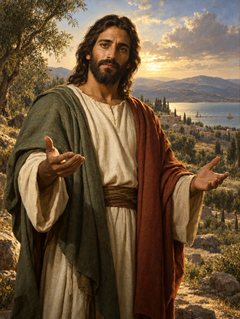 Jesus of NazarethTeacher, healer, and the ChristJohnApostle, beloved disciple, and witness to the WordMosesLawgiver, prophet, and leader of Israel out of Egypt
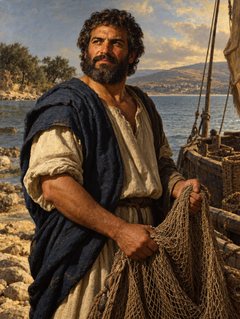 PeterApostle, fisherman, and rock of the early churchLazarusFriend of Jesus raised from the dead
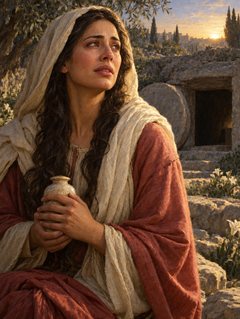 Mary MagdaleneFollower of Jesus and first witness of the resurrection
 John the BaptistProphet who prepared the way for Jesus
The ripple effect
Nicodemus has become a symbol of the thoughtful seeker. The phrase "a Nicodemus" is used in some church circles for a person who is interested in Jesus but is cautious about going public. In several periods, the term has been applied to Christians who hid their beliefs under persecution. John Calvin used it in a famous way: he called people who believed in the Reformation but continued to attend Catholic services "Nicodemites," and wrote a treatise against the practice in the 1540s.
John 3 shaped the language of Christianity in the English-speaking world. The phrase "born again" gave a name to a movement. Evangelical Christians describe their conversion as being born again. John 3:16 appears on posters, T-shirts and in stadiums. And the picture of Nicodemus at the burial has been painted often, notably by Rembrandt and many others. In Michelangelo's unfinished Florentine Pietà, the hooded figure standing over the body is traditionally said to be Nicodemus, carved with the sculptor's own features.
For people in religious or professional settings who are quietly drawn to Jesus, Nicodemus offers hope. He does not rush. He asks honest questions. He speaks up when it counts. And in the end, he shows up when everyone else is gone.
His words in our verse collection
Nicodemus himself speaks only a few lines: "How can a man be born when he is old?" (John 3:4), "How can these things be?" (John 3:9), and "Doth our law judge any man, before it hear him?" (John 7:51). None of these is in the daily verse collection. But three verses spoken to him by Jesus are: John 3:16, John 3:17 and John 3:21. The conversation continues with John 3:30, spoken by John the Baptist in the same chapter. Read all of John 3.
Sayings in our verse index
For God so loved the world, that he gave his only begotten Son, that whosoever believeth in him should not perish, but have everlasting life.
God so loved the world that he gave his only Son. Love moved first.
For God sent not his Son into the world to condemn the world; but that the world through him might be saved.
God did not send his Son to condemn the world, but to save it.
But he that doeth truth cometh to the light, that his deeds may be made manifest, that they are wrought in God.
Whoever lives by the truth comes into the light. Honesty walks toward light.
He must increase, but I must decrease.
He must become greater, and I must become less. That frees you from the spotlight.
Places
- 1Jerusalem · Night visit, council, burial
- 2Temple Mount · Where Jesus taught at Tabernacles
- 3Golgotha / garden tomb (traditional area) · Burial of Jesus
- Jerusalem: the city where the night visit, the council meeting and the burial took place.
- The Temple: where Jesus taught at Tabernacles and where the Sanhedrin was based.
- The garden tomb near Golgotha: where Nicodemus and Joseph laid the body.
Timeline
- 28Night visit to JesusJohn 3:1-21
- 29Speaks in the council at TabernaclesJohn 7:45-52
- 30Helps bury Jesus with myrrh and aloesJohn 19:38-42
- 415Relics said to be found (later tradition)Western tradition
- 450Gospel of Nicodemus (Acts of Pilate) circulating, c. fifth centuryApocryphal writing
- About AD 28: the night visit to Jesus in Jerusalem (John 3).
- About AD 29: Nicodemus speaks in the council at the Feast of Tabernacles (John 7).
- About AD 30: Nicodemus and Joseph bury Jesus (John 19).
- 415: relics of Nicodemus said to be found, according to later tradition.
- Fourth to fifth century: the Gospel of Nicodemus is written.
Watch
Go deeper
Read John 3, 7 and 19 together, and notice how Nicodemus changes. Compare the burial with Mark 15:42-47. Then read the Gospel of Nicodemus in the Ante-Nicene Fathers, volume 8 and ask what the later writer added. Josephus describes the Sanhedrin and the Pharisees in Antiquities of the Jews. Edersheim's Life and Times of Jesus the Messiah has a full chapter on this conversation. The BibleProject overview of the Gospel of John, Part 1 shows how John 3 fits into the structure of the book.
References and further reading
- Wikipedia: Nicodemus
- eBible.org: John 3
- eBible.org: John 3
- Blue Letter Bible: John 3:1
- Josephus, Antiquities of the Jews (Project Gutenberg)
- Edersheim, The Life and Times of Jesus the Messiah (CCEL)
- Ante-Nicene Fathers, vol. 8 (CCEL)
- eBible.org: John 19
Public-domain books, free to read
- Antiquities of the JewsFlavius Josephus
- The Life and Times of Jesus the MessiahAlfred Edersheim
- Church HistoryEusebius of Caesarea
- Ante-Nicene Fathers, vol. 8Various, ed. Roberts and Donaldson
Written by 508 Ministry. Scripture links open the public-domain World English Bible. Where Scripture, early church tradition and historians differ, this page says so.