faith · hope · loveNeither will they say, 'Look, here!' or, 'Look, there!' for behold, God's Kingdom is within you."Luke 17:21Daily verses
Skip to main content
Holiday offer: 50% off 508(c)(1)(A) trust packages through December 31.See the packages
508ministry.com
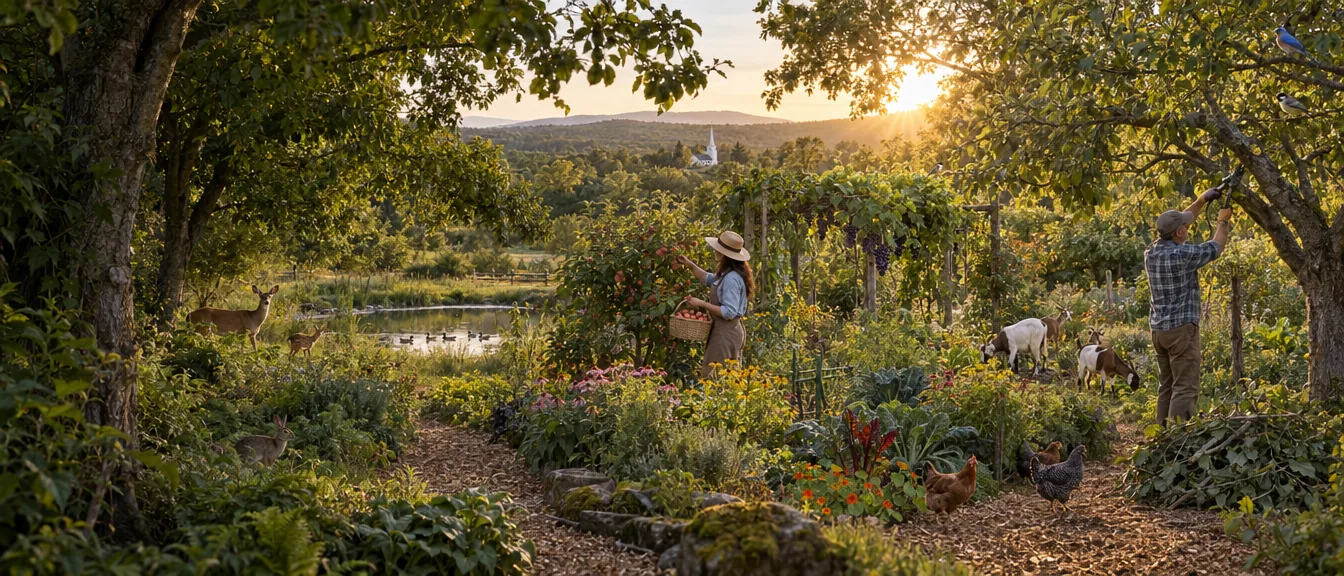
A church food forest in golden light: fruit trees, raised beds and families gathering the harvest

Impact & Giving

Agriculture ministries kit

Free, plain-language guides for churches that farm, garden, keep animals or want to plant a food forest. Each one points to free public sources for the full detail.

Hobby farm: plans from 1/4 acre to 10 acres

Basic farm-management principles, a guide to choosing and zoning the land, then a layout plan for six sizes from 1/4 acre to 10 acres with beds, food-forest guilds, chickens and goats, compost, water catchment and paths, a supplies checklist with typical US prices and where each price came from, a cost chart, how to hold the land through the ministry, and a growth roadmap. Every plan and checklist downloads as a PDF to print for a church work day.

Eight principles for a small farm

  1. Start small and grow. Begin with what you can care for every day, including the hard days. Add beds, trees or animals once the first ones thrive.
  2. Watch the ground first. Walk the land for a season: where the sun falls, where water runs and pools, where the wind comes from, where frost settles.
  3. Put daily work closest. Herbs and beds by the door, chickens and compost next, orchard and grazing furthest out. Fewer steps, more care.
  4. Build soil before planting. Test your soil through your county extension office. Add compost every season and keep the ground covered with mulch.
  5. Catch and keep water. Collect roof water in barrels or a tank, water at the roots early in the day, and mulch to keep moisture in.
  6. Care for animals daily. Clean water always, feed matched to age, dry shelter out of the wind, and a large-animal vet's number before you need it.
  7. Rotate and rest the ground. Move crops and animals so pests and disease do not build up and grazed ground can regrow.
  8. Keep simple records. Write down plantings, harvests, costs, treatments and births. The next season, and the next person, start from your notes.

Sources for further reading: USDA farmers.gov, beginning farmers, SARE, USDA National Agroforestry Center, and your county extension office.

Choosing the land: site selection and zoning

  1. Flat or gently sloped. Level to gently sloping ground is the easiest to farm, build on and keep from washing away. Steep ground erodes, makes fencing and driving harder, and sends runoff into the beds. Visit the day after a rain: there should be no standing water.
  2. Zoned for farming. Look for land zoned agricultural (often coded A-1, AG or AR) or rural residential that lists gardens and livestock as allowed uses. Codes differ by county. Find the parcel on the county zoning map (planning or GIS office), then read the ordinance for animals allowed per acre, setbacks, barn and fence rules, and whether you may sell produce at a farm stand. Ask the planning office to confirm in writing.
  3. Ag-use or farm tax exemption. Many states lower the property tax assessment for land in agricultural use. Minimum acreage, income and use rules are set by the state and county. Ask the county assessor what applies to the parcel and what happens if the land stops being farmed.
  4. Water. Is there a well, and has its flow and water quality been tested recently? Where your state requires water rights (common in the West), confirm they transfer with the land. Note the irrigation source: well, ditch, pond or town water. Rain tanks help, but one dry summer shows whether they are enough.
  5. Soil test. Check the soil type and drainage on the county soil map, then send a sample to a soil lab through your county extension office before you buy. Ask about past use: old dumps, treated-lumber areas and former orchards can leave contamination. USDA Web Soil Survey.
  6. Road access. Confirm the deed gives legal access, not just a path across a neighbor's land. A livestock trailer, a delivery truck and an ambulance should all be able to reach the gate. Find out who grades or plows the road.
  7. Flood zone. Look the parcel up on the FEMA Flood Map Service Center. Avoid a mapped floodway. Land in a flood zone can bring flood-insurance rules and lost crops. Walk the land after heavy rain to see where water pools or runs. FEMA Flood Map Service Center.
  8. Hardiness zone. Enter the ZIP code of the parcel in the USDA Plant Hardiness Zone Map. The zone tells you which fruit trees, berries and perennials survive winter there. Also write down the average first and last frost dates. USDA Plant Hardiness Zone Map.
  9. Distance to market and help. How far is it to a feed store, a large-animal vet, a farmers market, a church and neighbors who can help? A plan that sells produce works best within a short drive of customers. Find your county USDA service center.

Zoning and tax rules are set by your county and state. Ask the offices named above and get answers in writing. Download the guide and checklist (PDF)

Take this checklist to every parcel

Land-search checklist (print it and take it to every parcel)
CheckWrite it down
Ground is flat or gently sloped; no standing water after rainSlope: ______
Zoning allows gardens and the animals I plan to keepZone code: ______ Animals per acre: ______
County zoning office confirmed in writingName and date: ______
Ag-use or farm tax exemption: assessor saysRules: ______
Water: well flow and water-quality test, or water rightsTest date: ______
Soil test sent through county extensionpH: ______ Lab result date: ______
Legal road access in the deed; trailer and truck can reach the gateRoad owner: ______
Flood zone checked on the FEMA mapZone: ______
Plant hardiness zone checked for this ZIP codeZone: ______ Frost dates: ______
Sun: open to the south; room for a windbreak on the north and westNotes: ______
Distance to feed store, vet, market, churchMiles: ______
Who will hold title (see owning the land through the ministry)Decision: ______

Download the printable checklist (PDF)

Preferred location plan: where everything sits on a flat parcel

Preferred location plan: where the house, barn, gardens, orchard, pasture and water sit on a flat parcel, with wind, sun, slope and drainageRoadHouseWellBarn, hayKitchen garden, bedsOrchardChickensCompostPasturerotated paddocksLow corner:pond or tanksrunoff flows downhillPrevailing wind (check yours)N12345678South: the sun side. Not to scale; a flat or gently sloped parcel.
  1. 1Windbreak. A row of trees on the north and the windward side cuts wind on the house, animals and garden. Prevailing wind direction varies by place, so check yours.
  2. 2House near the road. Short driveway, and the house sits uphill of the barn, compost and animals.
  3. 3Well uphill. Keep the well uphill and well away from the barn, compost and runoff.
  4. 4Barn and hay downwind. Animal smells blow away from the house. The barn sits beside the road side of the pasture so feed deliveries are easy.
  5. 5Kitchen garden south of the house. Full sun, a few steps from the kitchen door, and nothing tall to the south of it.
  6. 6Orchard on the south edge. Trees to the south of the beds never shade them.
  7. 7Chickens and compost between barn and garden. Manure goes a short way to the compost, then to the beds.
  8. 8Pasture and a low corner for water. A gentle slope carries runoff to a pond or tanks in the low corner, away from the house and well.

1/4 acre plan

About 104 x 104 ft (10,816 sq ft), drawn to scale.

  • Beds sit closest to the kitchen door, so watering and picking happen every day.
  • One fruit tree with berries, herbs and comfrey around it is the start of a food forest.
  • Six hens give eggs and manure for the compost; rain barrels on the shed roof water the beds.
  • House and yard
  • Raised beds (4 x 8 ft)
  • Wood-chip paths
  • Fruit tree (food-forest guild centre)
  • Guild plants: berries, herbs, nitrogen fixers
  • Chicken coop
  • Chicken run
  • Compost bins
  • Water catchment: barrels, tank or pond
  • Tool shed

Download plan + checklist (PDF)

Aerial view of the 1/4 acre plan (illustration). Click to enlarge.

1/4 acre: resources and supplies

Startup $4,114.75Yearly $542.81

Supplies for 1/4 acre: typical US prices
ItemQtyEachTotalCost typePrice source, date checked
Cedar raised bed kit, 4 ft x 8 ft x 11 in8 kit$280.75$2,246.00One-timeJohnny's Selected Seeds, 2026-11-13
Organic raised bed and garden soil, 1.5 cu ft bag (Planning assumption: a 4x8 ft bed 11 in deep holds about 29 cu ft; budget buys 10 bags (15 cu ft) per bed, the rest is filled with own compost and yard waste.)80 bag$9.99$799.20One-timeMurdoch's, 2026-11-13
Honeycrisp apple tree, dwarf, bare-root (food-forest guild) (Stark Bro's dwarf Honeycrisp, SKU 29863; trees ship dormant in spring.)1 tree$39.99$39.99One-timeStark Bro's, 2026-11-13
Nasturtium Jewel Mix seed, 1 oz (guild support planting)1 packet$5.85$5.85One-timeJohnny's Selected Seeds, 2026-11-13
Rhode Island Red female day-old chicks (Listed single-chick price; Meyer lists a lower per-chick price from 6 chicks. Brooder heat and starter feed not included.)6 chick$4.86$29.16One-timeMeyer Hatchery, 2026-11-13
Chicken coop with run, up to 8 hens1 coop$389.88$389.88One-timeFleet Farm, 2026-11-13
Poultry waterer, 5 gal1 each$42.99$42.99One-timeFleet Farm, 2026-11-13
Livestock panels for 3-bin compost, 16 ft x 30 in (16 ft x 30 in livestock panel bent into bins; listing says it is built to contain livestock.)2 panel$30.99$61.98One-timeFleet Farm, 2026-11-13
Heavy-duty steel T-posts (compost bins)6 post$6.99$41.94One-timeFleet Farm, 2026-11-13
Used 55 gal poly drum with spigot (rain barrel) (Murdoch's listing says it works as a rain barrel. Diverter and gutter fittings not included.)2 drum$69.99$139.98One-timeMurdoch's, 2026-11-13
Raised bed drip irrigation kit, medium (up to 9 beds of 4x8)1 kit$166.85$166.85One-timeDripWorks, 2026-11-13
Steel wheelbarrow, 6 cu ft1 each$89.24$89.24One-timeFleet Farm, 2026-11-13
Round point shovel1 each$38.99$38.99One-timeFleet Farm, 2026-11-13
Hand hoe, Japanese style1 each$22.70$22.70One-timeJohnny's Selected Seeds, 2026-11-13
Johnny's Easy Choice Garden Set (vegetable and herb seeds) (Planning assumption: about 1 set per 4 beds, rounded up (2 sets).)2 set$80.70$161.40YearlyJohnny's Selected Seeds, 2026-11-13
Layer feed, 50 lb bag (Extension figure: a laying hen eats about 0.25 lb of feed per day (ANR-2913); 6 hens x 0.25 lb x 365 days = 548 lb = 10.95 bags of 50 lb, rounded up to 11.)11 bag$13.79$151.69YearlyFleet Farm, 2026-11-13
Pine shavings bedding, 2 cu ft bag (Planning assumption: about 2 bags of shavings per hen per year (6 hens).)12 bag$6.49$77.88YearlyFleet Farm, 2026-11-13
Organic compost top-up, 1.5 cu ft bag (Planning assumption: 2 bags per bed per year (8 beds).)16 bag$9.49$151.84YearlyMurdoch's, 2026-11-13
Startup (one-time)$4,114.75
Yearly$542.81

1/2 acre plan

About 148 x 148 ft (21,904 sq ft), drawn to scale.

  • Fourteen beds and a hoop house stretch the season by several weeks at each end.
  • Three fruit-tree guilds start a food forest; chickens can graze under the trees after harvest.
  • A fence keeps chickens and rabbits out of the beds; a tank on the shed collects roof water.
  • House and yard
  • Raised beds (4 x 8 ft)
  • Wood-chip paths
  • Fruit tree (food-forest guild centre)
  • Guild plants: berries, herbs, nitrogen fixers
  • Chicken coop
  • Chicken run
  • Compost bins
  • Hoop house
  • Water catchment: barrels, tank or pond
  • Tool shed

Download plan + checklist (PDF)

Aerial view of the 1/2 acre plan (illustration). Click to enlarge.

1/2 acre: resources and supplies

Startup $9,226.56Yearly $980.33

Supplies for 1/2 acre: typical US prices
ItemQtyEachTotalCost typePrice source, date checked
Cedar raised bed kit, 4 ft x 8 ft x 11 in14 kit$280.75$3,930.50One-timeJohnny's Selected Seeds, 2026-11-13
Organic raised bed and garden soil, 1.5 cu ft bag (Planning assumption: a 4x8 ft bed 11 in deep holds about 29 cu ft; budget buys 10 bags (15 cu ft) per bed, the rest is filled with own compost and yard waste.)140 bag$9.99$1,398.60One-timeMurdoch's, 2026-11-13
Honeycrisp apple tree, dwarf, bare-root (guilds 1 and 2) (Stark Bro's dwarf Honeycrisp, SKU 29863; trees ship dormant in spring.)2 tree$39.99$79.98One-timeStark Bro's, 2026-11-13
Gala apple tree, semi-dwarf, bare-root (guild 3, pollination partner) (Stark Bro's Gala semi-dwarf, SKU 21396.)1 tree$44.99$44.99One-timeStark Bro's, 2026-11-13
Nasturtium Jewel Mix seed, 1 oz (guild support planting)3 packet$5.85$17.55One-timeJohnny's Selected Seeds, 2026-11-13
Rhode Island Red female day-old chicks (Listed single-chick price; Meyer lists a lower per-chick price from 6 chicks. Brooder heat and starter feed not included.)10 chick$4.86$48.60One-timeMeyer Hatchery, 2026-11-13
Chicken coop, 8 to 12 hens1 coop$749.99$749.99One-timeMurdoch's, 2026-11-13
Poultry waterer, 5 gal2 each$42.99$85.98One-timeFleet Farm, 2026-11-13
Livestock panels for 3-bin compost, 16 ft x 30 in (16 ft x 30 in livestock panel bent into bins; listing says it is built to contain livestock.)2 panel$30.99$61.98One-timeFleet Farm, 2026-11-13
Vertical water tank, 550 gal (Gutter plumbing, base pad and fittings not included.)1 tank$779.99$779.99One-timeFleet Farm, 2026-11-13
Raised bed drip irrigation kit, large (up to 18 beds of 4x8)1 kit$329.55$329.55One-timeDripWorks, 2026-11-13
Livestock panels, 16 ft x 50 in, garden perimeter fence (about 208 ft)13 panel$59.99$779.87One-timeFleet Farm, 2026-11-13
Livestock panels, 16 ft x 50 in, DIY hoop house frame (4 panels, about 17 ft long) (Common DIY hoop-house method: arch the panels over a bed row and cover with film. Planning choice, not a retailer kit.)4 panel$59.99$239.96One-timeFleet Farm, 2026-11-13
Greenhouse film, Tufflite IV 20 ft x 65 ft (hoop house cover)1 roll$186.80$186.80One-timeJohnny's Selected Seeds, 2026-11-13
Heavy-duty steel T-posts (compost 6, hoop house 8, garden fence 26)40 post$6.99$279.60One-timeFleet Farm, 2026-11-13
Steel wheelbarrow, 6 cu ft1 each$89.24$89.24One-timeFleet Farm, 2026-11-13
Round point shovel2 each$38.99$77.98One-timeFleet Farm, 2026-11-13
Hand hoe, Japanese style2 each$22.70$45.40One-timeJohnny's Selected Seeds, 2026-11-13
Johnny's Easy Choice Garden Set (vegetable and herb seeds) (Planning assumption: about 1 set per 4 beds, rounded up (4 sets).)4 set$80.70$322.80YearlyJohnny's Selected Seeds, 2026-11-13
Layer feed, 50 lb bag (Extension figure: a laying hen eats about 0.25 lb of feed per day (ANR-2913); 10 hens x 0.25 lb x 365 days = 912 lb = 18.25 bags of 50 lb, rounded up to 19.)19 bag$13.79$262.01YearlyFleet Farm, 2026-11-13
Pine shavings bedding, 2 cu ft bag (Planning assumption: about 2 bags of shavings per hen per year (10 hens).)20 bag$6.49$129.80YearlyFleet Farm, 2026-11-13
Organic compost top-up, 1.5 cu ft bag (Planning assumption: 2 bags per bed per year (14 beds).)28 bag$9.49$265.72YearlyMurdoch's, 2026-11-13
Startup (one-time)$9,226.56
Yearly$980.33

1 acre plan

About 209 x 209 ft (43,681 sq ft), drawn to scale.

  • Beds and rows near the house, orchard and animals further out: daily work stays close.
  • Two goats rotate through paddock sections so the ground can rest and regrow.
  • A pond or large tank catches rain for animals and trees in dry months.
  • House and yard
  • Raised beds (4 x 8 ft)
  • In-ground rows
  • Wood-chip paths
  • Fruit tree (food-forest guild centre)
  • Guild plants: berries, herbs, nitrogen fixers
  • Chicken coop
  • Chicken run
  • Compost bins
  • Hoop house
  • Water catchment: barrels, tank or pond
  • Tool shed
  • Goat shelter
  • Goat paddock (rotated)

Download plan + checklist (PDF)

Aerial view of the 1 acre plan (illustration). Click to enlarge.

1 acre: resources and supplies

Startup $15,051.27Yearly $1,999.12

Supplies for 1 acre: typical US prices
ItemQtyEachTotalCost typePrice source, date checked
Cedar raised bed kit, 4 ft x 8 ft x 11 in20 kit$280.75$5,615.00One-timeJohnny's Selected Seeds, 2026-11-13
Organic raised bed and garden soil, 1.5 cu ft bag (Planning assumption: a 4x8 ft bed 11 in deep holds about 29 cu ft; budget buys 10 bags (15 cu ft) per bed, the rest is filled with own compost and yard waste.)200 bag$9.99$1,998.00One-timeMurdoch's, 2026-11-13
Honeycrisp apple tree, dwarf, bare-root (guilds 1 to 3) (Stark Bro's dwarf Honeycrisp, SKU 29863; trees ship dormant in spring.)3 tree$39.99$119.97One-timeStark Bro's, 2026-11-13
Gala apple tree, semi-dwarf, bare-root (guilds 4 to 6, pollination partners) (Stark Bro's Gala semi-dwarf, SKU 21396.)3 tree$44.99$134.97One-timeStark Bro's, 2026-11-13
Nasturtium Jewel Mix seed, 1 oz (guild support planting)6 packet$5.85$35.10One-timeJohnny's Selected Seeds, 2026-11-13
Rhode Island Red female day-old chicks (Listed single-chick price; Meyer lists a lower per-chick price from 6 chicks. Brooder heat and starter feed not included.)15 chick$4.86$72.90One-timeMeyer Hatchery, 2026-11-13
Chicken coop, up to 15 hens1 coop$1,789.88$1,789.88One-timeFleet Farm, 2026-11-13
Poultry waterer, 5 gal3 each$42.99$128.97One-timeFleet Farm, 2026-11-13
Livestock panels for compost bays, 16 ft x 30 in (16 ft x 30 in livestock panel bent into bins; listing says it is built to contain livestock.)4 panel$30.99$123.96One-timeFleet Farm, 2026-11-13
Vertical water tank, 1,050 gal (Gutter plumbing, base pad and fittings not included.)1 tank$1,209.99$1,209.99One-timeMurdoch's, 2026-11-13
Raised bed drip irrigation kit, large (up to 18 beds of 4x8)1 kit$329.55$329.55One-timeDripWorks, 2026-11-13
Raised bed drip irrigation kit, small (up to 3 beds of 4x8) (Large plus small kit covers the 20 beds.)1 kit$98.75$98.75One-timeDripWorks, 2026-11-13
Livestock panels, 16 ft x 50 in, goat paddock fence (about 304 ft) (Fence height is a planning choice; check local goat-fence advice.)19 panel$59.99$1,139.81One-timeFleet Farm, 2026-11-13
Livestock panels, 16 ft x 50 in, DIY hoop house frame (6 panels, about 25 ft long) (Common DIY hoop-house method: arch the panels over a bed row and cover with film. Planning choice, not a retailer kit.)6 panel$59.99$359.94One-timeFleet Farm, 2026-11-13
Greenhouse film, Tufflite IV 20 ft x 65 ft (hoop house cover)1 roll$186.80$186.80One-timeJohnny's Selected Seeds, 2026-11-13
Heavy-duty steel T-posts (compost 12, hoop house 12, goat fence 38)62 post$6.99$433.38One-timeFleet Farm, 2026-11-13
Nigerian Dwarf goats (does) (Breeder listing shows Nigerian Dwarf does at $300 (range on the page: $100 to $650 by age and registration).)2 goat$300.00$600.00One-timeBlue Sky Organic Farms, 2026-11-13
Portable livestock shelter, 12 ft x 12 ft (goat shelter) (Listed as a livestock shade shelter; add bedding and wind blocks in winter.)1 shelter$399.99$399.99One-timeFleet Farm, 2026-11-13
Steel wheelbarrow, 6 cu ft1 each$89.24$89.24One-timeFleet Farm, 2026-11-13
Round point shovel3 each$38.99$116.97One-timeFleet Farm, 2026-11-13
Hand hoe, Japanese style3 each$22.70$68.10One-timeJohnny's Selected Seeds, 2026-11-13
Johnny's Easy Choice Garden Set (vegetable and herb seeds) (Planning assumption: about 1 set per 4 beds, rounded up (5 sets).)5 set$80.70$403.50YearlyJohnny's Selected Seeds, 2026-11-13
Layer feed, 50 lb bag (Extension figure: a laying hen eats about 0.25 lb of feed per day (ANR-2913); 15 hens x 0.25 lb x 365 days = 1369 lb = 27.38 bags of 50 lb, rounded up to 28.)28 bag$13.79$386.12YearlyFleet Farm, 2026-11-13
Pine shavings bedding, 2 cu ft bag (Planning assumption: about 2 bags of shavings per hen per year (15 hens).)30 bag$6.49$194.70YearlyFleet Farm, 2026-11-13
Organic compost top-up, 1.5 cu ft bag (Planning assumption: 2 bags per bed per year (20 beds).)40 bag$9.49$379.60YearlyMurdoch's, 2026-11-13
Timothy hay bale, 50 lb (goat hay) (Planning assumption: 2 goats at about 75 lb each; Penn State Extension gives 2.5 to 3.0% of body weight per day in dry matter (feeds are 88 to 90% dry matter), so 75 lb x 2.5% = 1.9 lb dry matter = about 2.1 lb hay per goat per day. 2 goats x 2.1 lb x 183 days of hay (half year, pasture the rest) = about 770 lb = 15.4 bales, rounded up to 16.)16 bale$28.99$463.84YearlyFleet Farm, 2026-11-13
Softwood shavings, goat shelter bedding (Planning assumption: 1 bag per month.)12 bag$9.99$119.88YearlyMurdoch's, 2026-11-13
Goat CD&T vaccine, 10 doses (Planning assumption: booster for 2 goats per year; one bottle.)1 bottle$14.49$14.49YearlyFleet Farm, 2026-11-13
Goat dewormer (Planning assumption: one bottle per year; deworm by fecal test results.)1 bottle$36.99$36.99YearlyFleet Farm, 2026-11-13
Startup (one-time)$15,051.27
Yearly$1,999.12

2.5 acres plan

About 330 x 330 ft (108,900 sq ft), drawn to scale.

  • Thirty beds inside one garden fence, twelve fruit-tree guilds and two hoop houses; the open field can be hayed, grazed or planted later.
  • Four goats rotate through two paddocks, each with its own shelter, so each paddock rests while the other is grazed.
  • Twenty-five hens in two coop-and-run units; two rain tanks catch the shed and barn roof water.
  • House and yard
  • Raised beds (4 x 8 ft)
  • Wood-chip paths
  • Fruit tree (food-forest guild centre)
  • Guild plants: berries, herbs, nitrogen fixers
  • Chicken coop
  • Chicken run
  • Compost bins
  • Hoop house
  • Water catchment: barrels, tank or pond
  • Tool shed
  • Goat shelter
  • Goat paddock (rotated)

Download plan + checklist (PDF)

Aerial view of the 2.5 acres plan (illustration). Click to enlarge.

2.5 acres: resources and supplies

Startup $26,388.72Yearly $3,420.34

Supplies for 2.5 acres: typical US prices
ItemQtyEachTotalCost typePrice source, date checked
Cedar raised bed kit, 4 ft x 8 ft x 11 in30 kit$280.75$8,422.50One-timeJohnny's Selected Seeds, 2026-11-13
Organic raised bed and garden soil, 1.5 cu ft bag (Planning assumption: 10 bags (15 cu ft) per bed, the rest filled with your own compost and yard waste.)300 bag$9.99$2,997.00One-timeMurdoch's, 2026-11-13
Honeycrisp apple tree, dwarf, bare-root (half of the guilds)6 tree$39.99$239.94One-timeStark Bro's, 2026-11-13
Gala apple tree, semi-dwarf, bare-root (the other half, pollination partner)6 tree$44.99$269.94One-timeStark Bro's, 2026-11-13
Nasturtium Jewel Mix seed, 1 oz (one packet per guild)12 packet$5.85$70.20One-timeJohnny's Selected Seeds, 2026-11-13
Rhode Island Red female day-old chicks25 chick$4.86$121.50One-timeMeyer Hatchery, 2026-11-13
Chicken coop, up to 15 hens (25 hens in 2 units)2 coop$1,789.88$3,579.76One-timeFleet Farm, 2026-11-13
Poultry waterer, 5 gal (Planning assumption: one 5 gal waterer per 5 hens, as in the 1 acre plan.)5 each$42.99$214.95One-timeFleet Farm, 2026-11-13
Livestock panels for compost bays, 16 ft x 30 in (6 panels bent into bays; sized for the manure of 25 hens and 4 goats plus garden waste.)6 panel$30.99$185.94One-timeFleet Farm, 2026-11-13
Vertical water tank, 1,050 gal (Gutter plumbing, base pads and fittings not included.)2 tank$1,209.99$2,419.98One-timeMurdoch's, 2026-11-13
Raised bed drip irrigation kit, large (up to 18 beds of 4x8)2 kit$329.55$659.10One-timeDripWorks, 2026-11-13
Livestock panels, 16 ft x 50 in, garden fence (about 230 ft around the beds) (Fence length is the perimeter of the dashed garden box on the plan. Gates and deer fencing beyond 50 in not included.)15 panel$59.99$899.85One-timeFleet Farm, 2026-11-13
Livestock panels, 16 ft x 50 in, goat paddocks (about 490 ft, 2 paddocks) (Fence length is the paddock block outline plus the dividers. Fence height is a planning choice; check local goat-fence advice.)31 panel$59.99$1,859.69One-timeFleet Farm, 2026-11-13
Livestock panels, 16 ft x 50 in, DIY hoop house frames (6 per house, 2 houses) (Common DIY hoop-house method: arch the panels over a bed row and cover with greenhouse film.)12 panel$59.99$719.88One-timeFleet Farm, 2026-11-13
Greenhouse film, Tufflite IV 20 ft x 65 ft (one roll per hoop house)2 roll$186.80$373.60One-timeJohnny's Selected Seeds, 2026-11-13
Heavy-duty steel T-posts (compost 18, hoop houses 24, garden fence 29, paddock fence 62) (Posts every 8 ft along the fence lines.)133 post$6.99$929.67One-timeFleet Farm, 2026-11-13
Nigerian Dwarf goats (does) (Breeder listing shows Nigerian Dwarf does at $300 (range on the listing). Does only; a buck is not included.)4 goat$300.00$1,200.00One-timeBlue Sky Organic Farms, 2026-11-13
Portable livestock shelter, 12 ft x 12 ft (one per paddock) (Listed as a livestock shade shelter; add bedding and wind blocking.)2 shelter$399.99$799.98One-timeFleet Farm, 2026-11-13
Steel wheelbarrow, 6 cu ft2 each$89.24$178.48One-timeFleet Farm, 2026-11-13
Round point shovel4 each$38.99$155.96One-timeFleet Farm, 2026-11-13
Hand hoe, Japanese style4 each$22.70$90.80One-timeJohnny's Selected Seeds, 2026-11-13
Johnny's Easy Choice Garden Set (vegetable and herb seeds) (Planning assumption: 1 set per 4 beds, plus 1 set per 2 in-ground rows, rounded up (8 sets).)8 set$80.70$645.60YearlyJohnny's Selected Seeds, 2026-11-13
Layer feed, 50 lb bag (Extension figure: a laying hen eats about 0.25 lb of feed per day; about 1.9 bags of 50 lb per hen per year, as in the 1/4 and 1/2 acre plans.)48 bag$13.79$661.92YearlyFleet Farm, 2026-11-13
Pine shavings bedding, 2 cu ft bag (Planning assumption: about 2 bags of shavings per hen per year.)50 bag$6.49$324.50YearlyFleet Farm, 2026-11-13
Organic compost top-up, 1.5 cu ft bag (Planning assumption: 2 bags per bed per year (30 beds).)60 bag$9.49$569.40YearlyMurdoch's, 2026-11-13
Timothy hay bale, 50 lb (goat hay) (Planning assumption as in the 1 acre plan: 8 bales per goat per year; your own hay field would lower this.)32 bale$28.99$927.68YearlyFleet Farm, 2026-11-13
Softwood shavings, goat shelter bedding (Planning assumption: 1 bag per month per shelter (2 shelters).)24 bag$9.99$239.76YearlyMurdoch's, 2026-11-13
Goat CD&T vaccine, 10 doses (Planning assumption: 10 doses per bottle, one booster per goat per year (4 goats).)1 bottle$14.49$14.49YearlyFleet Farm, 2026-11-13
Goat dewormer (Planning assumption: one bottle per 4 goats per year; deworm by fecal test result.)1 bottle$36.99$36.99YearlyFleet Farm, 2026-11-13
Startup (one-time)$26,388.72
Yearly$3,420.34

5 acres plan

About 467 x 467 ft (218,089 sq ft), drawn to scale.

  • Forty beds and six in-ground rows share one fence, so one gate covers the whole market garden; twenty-four guilds make a real orchard.
  • Six goats rotate through three paddocks; the field beside the garden is room for hay or the next stage of growth.
  • Forty hens in three coop-and-run units; three tanks and two hoop houses stretch water and season.
  • House and yard
  • Raised beds (4 x 8 ft)
  • In-ground rows
  • Wood-chip paths
  • Fruit tree (food-forest guild centre)
  • Guild plants: berries, herbs, nitrogen fixers
  • Chicken coop
  • Chicken run
  • Compost bins
  • Hoop house
  • Water catchment: barrels, tank or pond
  • Tool shed
  • Goat shelter
  • Goat paddock (rotated)

Download plan + checklist (PDF)

Aerial view of the 5 acres plan (illustration). Click to enlarge.

5 acres: resources and supplies

Startup $38,003.06Yearly $5,215.17

Supplies for 5 acres: typical US prices
ItemQtyEachTotalCost typePrice source, date checked
Cedar raised bed kit, 4 ft x 8 ft x 11 in40 kit$280.75$11,230.00One-timeJohnny's Selected Seeds, 2026-11-13
Organic raised bed and garden soil, 1.5 cu ft bag (Planning assumption: 10 bags (15 cu ft) per bed, the rest filled with your own compost and yard waste.)400 bag$9.99$3,996.00One-timeMurdoch's, 2026-11-13
Honeycrisp apple tree, dwarf, bare-root (half of the guilds)12 tree$39.99$479.88One-timeStark Bro's, 2026-11-13
Gala apple tree, semi-dwarf, bare-root (the other half, pollination partner)12 tree$44.99$539.88One-timeStark Bro's, 2026-11-13
Nasturtium Jewel Mix seed, 1 oz (one packet per guild)24 packet$5.85$140.40One-timeJohnny's Selected Seeds, 2026-11-13
Rhode Island Red female day-old chicks40 chick$4.86$194.40One-timeMeyer Hatchery, 2026-11-13
Chicken coop, up to 15 hens (40 hens in 3 units)3 coop$1,789.88$5,369.64One-timeFleet Farm, 2026-11-13
Poultry waterer, 5 gal (Planning assumption: one 5 gal waterer per 5 hens, as in the 1 acre plan.)8 each$42.99$343.92One-timeFleet Farm, 2026-11-13
Livestock panels for compost bays, 16 ft x 30 in (8 panels bent into bays; sized for the manure of 40 hens and 6 goats plus garden waste.)8 panel$30.99$247.92One-timeFleet Farm, 2026-11-13
Vertical water tank, 1,050 gal (Gutter plumbing, base pads and fittings not included.)3 tank$1,209.99$3,629.97One-timeMurdoch's, 2026-11-13
Raised bed drip irrigation kit, large (up to 18 beds of 4x8)2 kit$329.55$659.10One-timeDripWorks, 2026-11-13
Raised bed drip irrigation kit, small (up to 3 beds of 4x8) (Large plus small kits cover the 40 beds at the lowest cost.)2 kit$98.75$197.50One-timeDripWorks, 2026-11-13
Livestock panels, 16 ft x 50 in, garden fence (about 600 ft around the beds and rows) (Fence length is the perimeter of the dashed garden box on the plan. Gates and deer fencing beyond 50 in not included.)38 panel$59.99$2,279.62One-timeFleet Farm, 2026-11-13
Livestock panels, 16 ft x 50 in, goat paddocks (about 700 ft, 3 paddocks) (Fence length is the paddock block outline plus the dividers. Fence height is a planning choice; check local goat-fence advice.)44 panel$59.99$2,639.56One-timeFleet Farm, 2026-11-13
Livestock panels, 16 ft x 50 in, DIY hoop house frames (6 per house, 2 houses) (Common DIY hoop-house method: arch the panels over a bed row and cover with greenhouse film.)12 panel$59.99$719.88One-timeFleet Farm, 2026-11-13
Greenhouse film, Tufflite IV 20 ft x 65 ft (one roll per hoop house)2 roll$186.80$373.60One-timeJohnny's Selected Seeds, 2026-11-13
Heavy-duty steel T-posts (compost 24, hoop houses 24, garden fence 75, paddock fence 88) (Posts every 8 ft along the fence lines.)211 post$6.99$1,474.89One-timeFleet Farm, 2026-11-13
Nigerian Dwarf goats (does) (Breeder listing shows Nigerian Dwarf does at $300 (range on the listing). Does only; a buck is not included.)6 goat$300.00$1,800.00One-timeBlue Sky Organic Farms, 2026-11-13
Portable livestock shelter, 12 ft x 12 ft (one per paddock) (Listed as a livestock shade shelter; add bedding and wind blocking.)3 shelter$399.99$1,199.97One-timeFleet Farm, 2026-11-13
Steel wheelbarrow, 6 cu ft2 each$89.24$178.48One-timeFleet Farm, 2026-11-13
Round point shovel5 each$38.99$194.95One-timeFleet Farm, 2026-11-13
Hand hoe, Japanese style5 each$22.70$113.50One-timeJohnny's Selected Seeds, 2026-11-13
Johnny's Easy Choice Garden Set (vegetable and herb seeds) (Planning assumption: 1 set per 4 beds, plus 1 set per 2 in-ground rows, rounded up (13 sets).)13 set$80.70$1,049.10YearlyJohnny's Selected Seeds, 2026-11-13
Layer feed, 50 lb bag (Extension figure: a laying hen eats about 0.25 lb of feed per day; about 1.9 bags of 50 lb per hen per year, as in the 1/4 and 1/2 acre plans.)76 bag$13.79$1,048.04YearlyFleet Farm, 2026-11-13
Pine shavings bedding, 2 cu ft bag (Planning assumption: about 2 bags of shavings per hen per year.)80 bag$6.49$519.20YearlyFleet Farm, 2026-11-13
Organic compost top-up, 1.5 cu ft bag (Planning assumption: 2 bags per bed per year (40 beds).)80 bag$9.49$759.20YearlyMurdoch's, 2026-11-13
Timothy hay bale, 50 lb (goat hay) (Planning assumption as in the 1 acre plan: 8 bales per goat per year; your own hay field would lower this.)48 bale$28.99$1,391.52YearlyFleet Farm, 2026-11-13
Softwood shavings, goat shelter bedding (Planning assumption: 1 bag per month per shelter (3 shelters).)36 bag$9.99$359.64YearlyMurdoch's, 2026-11-13
Goat CD&T vaccine, 10 doses (Planning assumption: 10 doses per bottle, one booster per goat per year (6 goats).)1 bottle$14.49$14.49YearlyFleet Farm, 2026-11-13
Goat dewormer (Planning assumption: one bottle per 4 goats per year; deworm by fecal test result.)2 bottle$36.99$73.98YearlyFleet Farm, 2026-11-13
Startup (one-time)$38,003.06
Yearly$5,215.17

10 acres plan

About 660 x 660 ft (435,600 sq ft), drawn to scale.

  • Sixty beds and twelve in-ground rows grow enough to feed many families or supply a farm stand; forty-eight guilds form a full orchard.
  • Ten goats rotate through four paddocks with a shelter in each; the big open field is for hay, pasture or more orchard blocks.
  • Sixty hens in four coop-and-run units; four tanks and three hoop houses carry the garden through dry spells and shoulder seasons.
  • House and yard
  • Raised beds (4 x 8 ft)
  • In-ground rows
  • Wood-chip paths
  • Fruit tree (food-forest guild centre)
  • Guild plants: berries, herbs, nitrogen fixers
  • Chicken coop
  • Chicken run
  • Compost bins
  • Hoop house
  • Water catchment: barrels, tank or pond
  • Tool shed
  • Goat shelter
  • Goat paddock (rotated)

Download plan + checklist (PDF)

Aerial view of the 10 acres plan (illustration). Click to enlarge.

10 acres: resources and supplies

Startup $54,420.62Yearly $8,108.54

Supplies for 10 acres: typical US prices
ItemQtyEachTotalCost typePrice source, date checked
Cedar raised bed kit, 4 ft x 8 ft x 11 in60 kit$280.75$16,845.00One-timeJohnny's Selected Seeds, 2026-11-13
Organic raised bed and garden soil, 1.5 cu ft bag (Planning assumption: 10 bags (15 cu ft) per bed, the rest filled with your own compost and yard waste.)600 bag$9.99$5,994.00One-timeMurdoch's, 2026-11-13
Honeycrisp apple tree, dwarf, bare-root (half of the guilds)24 tree$39.99$959.76One-timeStark Bro's, 2026-11-13
Gala apple tree, semi-dwarf, bare-root (the other half, pollination partner)24 tree$44.99$1,079.76One-timeStark Bro's, 2026-11-13
Nasturtium Jewel Mix seed, 1 oz (one packet per guild)48 packet$5.85$280.80One-timeJohnny's Selected Seeds, 2026-11-13
Rhode Island Red female day-old chicks60 chick$4.86$291.60One-timeMeyer Hatchery, 2026-11-13
Chicken coop, up to 15 hens (60 hens in 4 units)4 coop$1,789.88$7,159.52One-timeFleet Farm, 2026-11-13
Poultry waterer, 5 gal (Planning assumption: one 5 gal waterer per 5 hens, as in the 1 acre plan.)12 each$42.99$515.88One-timeFleet Farm, 2026-11-13
Livestock panels for compost bays, 16 ft x 30 in (10 panels bent into bays; sized for the manure of 60 hens and 10 goats plus garden waste.)10 panel$30.99$309.90One-timeFleet Farm, 2026-11-13
Vertical water tank, 1,050 gal (Gutter plumbing, base pads and fittings not included.)4 tank$1,209.99$4,839.96One-timeMurdoch's, 2026-11-13
Raised bed drip irrigation kit, large (up to 18 beds of 4x8)3 kit$329.55$988.65One-timeDripWorks, 2026-11-13
Raised bed drip irrigation kit, small (up to 3 beds of 4x8) (Large plus small kits cover the 60 beds at the lowest cost.)2 kit$98.75$197.50One-timeDripWorks, 2026-11-13
Livestock panels, 16 ft x 50 in, garden fence (about 730 ft around the beds and rows) (Fence length is the perimeter of the dashed garden box on the plan. Gates and deer fencing beyond 50 in not included.)46 panel$59.99$2,759.54One-timeFleet Farm, 2026-11-13
Livestock panels, 16 ft x 50 in, goat paddocks (about 910 ft, 4 paddocks) (Fence length is the paddock block outline plus the dividers. Fence height is a planning choice; check local goat-fence advice.)57 panel$59.99$3,419.43One-timeFleet Farm, 2026-11-13
Livestock panels, 16 ft x 50 in, DIY hoop house frames (6 per house, 3 houses) (Common DIY hoop-house method: arch the panels over a bed row and cover with greenhouse film.)18 panel$59.99$1,079.82One-timeFleet Farm, 2026-11-13
Greenhouse film, Tufflite IV 20 ft x 65 ft (one roll per hoop house)3 roll$186.80$560.40One-timeJohnny's Selected Seeds, 2026-11-13
Heavy-duty steel T-posts (compost 30, hoop houses 36, garden fence 92, paddock fence 114) (Posts every 8 ft along the fence lines.)272 post$6.99$1,901.28One-timeFleet Farm, 2026-11-13
Nigerian Dwarf goats (does) (Breeder listing shows Nigerian Dwarf does at $300 (range on the listing). Does only; a buck is not included.)10 goat$300.00$3,000.00One-timeBlue Sky Organic Farms, 2026-11-13
Portable livestock shelter, 12 ft x 12 ft (one per paddock) (Listed as a livestock shade shelter; add bedding and wind blocking.)4 shelter$399.99$1,599.96One-timeFleet Farm, 2026-11-13
Steel wheelbarrow, 6 cu ft3 each$89.24$267.72One-timeFleet Farm, 2026-11-13
Round point shovel6 each$38.99$233.94One-timeFleet Farm, 2026-11-13
Hand hoe, Japanese style6 each$22.70$136.20One-timeJohnny's Selected Seeds, 2026-11-13
Johnny's Easy Choice Garden Set (vegetable and herb seeds) (Planning assumption: 1 set per 4 beds, plus 1 set per 2 in-ground rows, rounded up (21 sets).)21 set$80.70$1,694.70YearlyJohnny's Selected Seeds, 2026-11-13
Layer feed, 50 lb bag (Extension figure: a laying hen eats about 0.25 lb of feed per day; about 1.9 bags of 50 lb per hen per year, as in the 1/4 and 1/2 acre plans.)114 bag$13.79$1,572.06YearlyFleet Farm, 2026-11-13
Pine shavings bedding, 2 cu ft bag (Planning assumption: about 2 bags of shavings per hen per year.)120 bag$6.49$778.80YearlyFleet Farm, 2026-11-13
Organic compost top-up, 1.5 cu ft bag (Planning assumption: 2 bags per bed per year (60 beds).)120 bag$9.49$1,138.80YearlyMurdoch's, 2026-11-13
Timothy hay bale, 50 lb (goat hay) (Planning assumption as in the 1 acre plan: 8 bales per goat per year; your own hay field would lower this.)80 bale$28.99$2,319.20YearlyFleet Farm, 2026-11-13
Softwood shavings, goat shelter bedding (Planning assumption: 1 bag per month per shelter (4 shelters).)48 bag$9.99$479.52YearlyMurdoch's, 2026-11-13
Goat CD&T vaccine, 10 doses (Planning assumption: 10 doses per bottle, one booster per goat per year (10 goats).)1 bottle$14.49$14.49YearlyFleet Farm, 2026-11-13
Goat dewormer (Planning assumption: one bottle per 4 goats per year; deworm by fecal test result.)3 bottle$36.99$110.97YearlyFleet Farm, 2026-11-13
Startup (one-time)$54,420.62
Yearly$8,108.54

What each size costs in the first year

First-year cost by farm size: startup and yearly costs stacked$0$20,000$40,000$60,000$80,0001/4 acre startup $4,114.751/4 acre yearly $542.811/4 acre$4,657.561/2 acre startup $9,226.561/2 acre yearly $980.331/2 acre$10,206.891 acre startup $15,051.271 acre yearly $1,999.121 acre$17,050.392.5 acres startup $26,388.722.5 acres yearly $3,420.342.5 acres$29,809.065 acres startup $38,003.065 acres yearly $5,215.175 acres$43,218.2310 acres startup $54,420.6210 acres yearly $8,108.5410 acres$62,529.16

Startup, one-time Yearly, every year

First-year cost by farm size (data behind the chart)
SizeStartup (one-time)YearlyFirst year
1/4 acre$4,114.75$542.81$4,657.56
1/2 acre$9,226.56$980.33$10,206.89
1 acre$15,051.27$1,999.12$17,050.39
2.5 acres$26,388.72$3,420.34$29,809.06
5 acres$38,003.06$5,215.17$43,218.23
10 acres$54,420.62$8,108.54$62,529.16

Typical retail prices from the listed product pages on the date checked; local prices vary. Prices checked 2026-11-13. Land, buildings, a well, vet visits and your time are not included. Used tools, donated lumber and church work days bring the startup cost down.

Owning the land through the ministry

The land you farm is a long-term asset, and who holds the title matters. 508 Ministry can help you set up two kinds of trust for it.

A land trust that holds the property

The trust holds title to the farm land and is placed under the ministry's 508(c)(1)(A) trust, so the land is held for the ministry's purpose and not in one person's name.

A real-estate holding trust for income property

For property that earns rent, such as a farmhouse rental or acreage leased to a grower, a real-estate holding trust keeps the property and its records in one place under trust.

A real-estate holding trust is not a REIT. A REIT is a specific kind of tax entity with its own IRS requirements, and we do not call these trusts REITs.

This is general information, not legal or tax advice. Talk to your own tax professional and an attorney in your state before you buy land or move property into a trust. Rules differ by state and by your situation.

Book a call Start the questionnaire

This is the foundation: your growth roadmap

The basics come first, and every later layer grows out of them.

Growth roadmap: foundation, multiply what you have, grow into production, grow into service1Foundationthe plan you picked2Multiplyseed, cuttings, grafts, stock3Productiongrow the next size4Servicefeed families, teach others

Stage 1: Foundation

The first growing season

The plan you picked, built well.

  • Soil tested and amended
  • Beds built and filled, water on
  • First fruit-tree guild planted
  • Hens or goats settled with shelter and fence
  • Records started: plantings, costs, treatments
  • Mark your best plants and healthiest animals

Stage 2: Multiply what you have

The next seasons

Make more from what already grows here.

  • Save seed from open-pollinated plants that did best
  • Divide berries, herbs and perennials
  • Take cuttings; graft scionwood from your best trees
  • Raise replacement pullets and keep healthy doe kids
  • Send your best plants to a tissue-culture lab for clean copies

Stage 3: Grow into production

As the stock builds

Plant the next size from your own stock.

  • Add beds, orchard blocks and paddocks from your own plants and animals
  • Spend on fence, tanks and shelter, not on plants
  • Start the hay field or a market row
  • Sell extra eggs and produce where state rules allow

Stage 4: Grow into service

When there is more than you need

Turn the harvest into help for others.

  • Feed families from the garden and orchard
  • Open a farm stand or a food pantry shelf
  • Start a seed library from your saved seed
  • Train other churches and hand them starts of your plants

How each plan grows into the next size

Each plan grows into the next size, drawn with circles sized by acreage1/4acre1/2acre1acre2.5acres5acres10acres
What each size adds to the one before
PlanBedsFruit-tree guildsHensGoatsAdded from the size beforePlants, seed, chicks and goats in that checklist
1/4 acre8160Where everyone starts$236.40
1/2 acre143100+6 beds, +2 guilds, +4 hens, +0 goats$513.92
1 acre206152+6 beds, +3 guilds, +5 hens, +2 goats$1,366.44
2.5 acres3012254+10 beds, +6 guilds, +10 hens, +2 goats$2,547.18
5 acres4024406+10 beds, +12 guilds, +15 hens, +2 goats$4,203.66
10 acres60486010+20 beds, +24 guilds, +20 hens, +4 goats$7,306.62

The last column adds up the checklist lines for fruit trees, seed, chicks and goats. As your own stock grows, those lines shrink: divide berries and herbs for new guild plantings, graft or buy only rootstock for new trees, raise pullets from your own hens and keep healthy doe kids. Fence, tanks, shelter and feed are still bought.

Plants and animals matched to your hardiness zone

Plants

  • Start with your zone. Look up the USDA Plant Hardiness Zone for the parcel's ZIP code. Choose trees, berries and perennials rated for your zone or a colder one; one zone colder gives you a margin for a hard winter.
  • Match fruit trees to your winters. Fruit trees need a set number of cold hours each winter, and nurseries list the chill hours for each variety. Pick varieties whose needs fit your winters, and ask the nursery for rootstock that suits your soil and climate.
  • Save seed from open-pollinated plants. Seed from hybrid (F1) varieties does not come true, so save seed only from open-pollinated or heirloom varieties. Beans, peas, lettuce and tomatoes are the easiest. Squash, corn and cabbage-family crops cross with neighbors and need distance or hand pollination.
  • Pick your best, every year. Save seed from the plants that grew best in your own ground, not from the biggest fruit alone. Over several seasons the seed adapts to your soil, water and frost dates.
  • Divide and take cuttings. Berries, herbs, comfrey and many perennials multiply by division and cuttings, and the new plants are exact copies of the parent.
  • Graft your best trees. A fruit tree is a clone. Graft a twig of your best tree onto rootstock and the new tree is the same variety. Check plant patents first: a patented variety cannot be propagated without a license, and the tag will say so.
  • Clone the best with tissue culture. A laboratory can grow many identical, disease-free plants from a few cells of your best plant. Use a commercial or university lab once you know which plants are worth copying.

Animals

  • Keep your healthiest, calmest animals. Write down each animal's parents and any health problems. Breed from the ones that stay healthy on your feed and in your climate.
  • Avoid breeding close relatives. Inbreeding concentrates weak traits. As the herd grows, bring in an unrelated buck or share one with a neighbor.
  • Ask for health records. Goat sellers can show herd test results for CAE, CL and Johne's disease. Keep new animals apart from the herd for at least 30 days before they join it.
  • Choose chicken breeds for your climate. Cold zones need hardy breeds with small combs; hot zones need heat-tolerant birds. Broody hens or a small incubator let you raise your own pullets.
  • Check state rules first. Rules cover selling live animals, hatching eggs and moving animals across state lines. Call your state department of agriculture before you sell.

Sources and where to ask: USDA Plant Hardiness Zone Map Seed Savers Exchange: seed saving SARE (sustainable agriculture research and education) USDA National Agroforestry Center Your county USDA service center and extension office

Animal husbandry basics

Start with the animals you can care for every day, including the hard days. Every animal needs clean water it can always reach, feed matched to its age and work, dry shelter out of the wind, and room to move.

Walk the animals morning and evening. Look at eyes, coat, breathing, manure and appetite; most problems show there first. Write down births, treatments, weights and feed so the next person can pick up where you left off.

Find a large-animal veterinarian before you need one, and keep a simple first-aid box, a thermometer and the vet's number in the barn.

Free full guides to read, print or share

Read more: Cooperative Extension (extension.org) (public service, linked); Animal husbandry, Wikipedia (CC BY-SA 4.0, linked, not copied)

Every animal needs water it can always reach, feed matched to its age and a dry place out of the wind.
Rescue horses need daily care, room to move and a large-animal vet.
Shelters and church farms keep records so the next person can pick up the care.

Horticulture and garden beds

Pick the sunniest ground you have: most vegetables want six or more hours of direct sun. Build soil before you plant by adding compost every season and keeping the ground covered with mulch or a cover crop.

Plant what your people already cook. Grow in short rows you can reach from a path, water at the roots early in the day, and keep notes on what thrived and when you planted it.

Your county extension office can test your soil and tell you which varieties do well where you are.

Free full guides to read, print or share

Read more: Sustainable Agriculture Research and Education (SARE), USDA-funded (free publications, linked); USDA National Agricultural Library: farms and production systems (U.S. government work)

Build the soil first, then plant what your people already cook.

Food forests

A food forest copies the layers of a young woodland: tall nut and fruit trees, smaller fruit trees, berry shrubs, herbs and ground covers, with vines and roots in between. Once established it feeds people for decades with little digging.

Start small: one guild around a single fruit tree, with nitrogen-fixing shrubs and flowers that bring pollinators. Mulch heavily, water deeply for the first two summers, and add plants as you learn your site.

Choose trees that are proven in your climate zone. Local nurseries and the extension office know which ones survive your winters.

Free full guides to read, print or share

Read more: USDA National Agroforestry Center (U.S. government work); Forest gardening, Wikipedia (CC BY-SA 4.0, linked, not copied)

Flowers and hives bring the pollinators a food forest depends on.

Seed saving

Save seed from open-pollinated or heirloom plants; seed from hybrids will not grow true. Beans, peas, lettuce and tomatoes are the easiest place to start because they mostly pollinate themselves.

Let the best plants fully ripen their seed, dry it out of the sun, label it with the variety and year, and store it cool, dry and dark in paper envelopes or sealed jars.

Share what you save. A church seed library lets a whole community keep varieties that grow well in its own ground.

Free full guides to read, print or share

Read more: Seed Savers Exchange: learn (nonprofit resource, linked); Seed saving, Wikipedia (CC BY-SA 4.0, linked, not copied)

A church seed library keeps the varieties that grow well in your own ground.

Small farm business basics

Keep farm money separate from personal money from the first day, and record every sale and expense. A simple notebook works if it is kept every week.

Sell close to home first: church members, a farm stand, a weekly box. Know your cost to grow each crop before you set prices, and keep the products people ask for twice.

Before you borrow, read what the U.S. Department of Agriculture offers new and beginning farmers, including training and small loans.

Free full guides to read, print or share

Read more: USDA farmers.gov: beginning farmers (U.S. government work); ATTRA Sustainable Agriculture (NCAT) (free publications, linked); FAO plant production and protection (linked)

Sell close to home first: church members, a farm stand, a weekly box.

The short guides are written by 508 Ministry. The full guides are U.S. government works, books and almanacs published before 1930 (public domain in the US), FAO and extension publications free for non-commercial use, and Wikipedia articles (CC BY-SA 4.0, linked with attribution, not copied). We do not reproduce the text of the current, copyrighted Farmer's Almanac. Old books are history: match planting dates to your own frost dates, and treat old remedies for animals as background, never as veterinary advice. Pictures on this page are illustrations made for 508 Ministry.

Request seeds, plant stock or training

For churches and ministries that grow food, keep animals or want to start a food forest. We match requests with gifts as they come in; we cannot promise every request.